Zoe Hardy
The CageZoe Hardy’s story links an initially unexplained break-in and a suspicious figure outside her home to the case against Ken Carlton. A recent arrival who is still decorating and preparing for new furniture, she becomes the target of an intrusion that the police do not initially treat with urgency. Later, Ken exploits the expected delivery of her dining-room furniture to abduct her. In captivity, Zoe meets Jill Richards, learns how the earlier abductions were carried out, and tries to escape; when the police reach them, Jill is able to explain why Zoe needs medical help.
Identity and Home
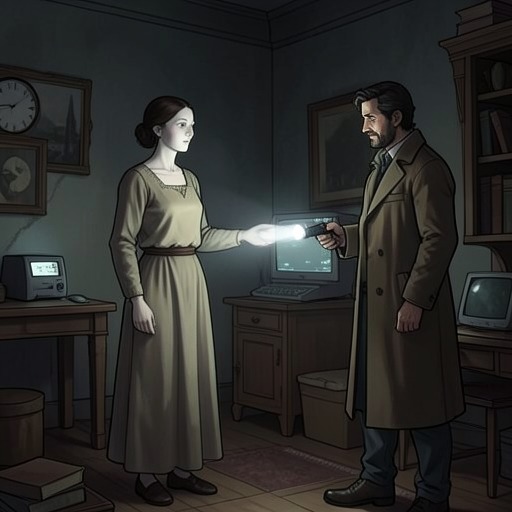
Zoe is introduced at her doorstep, where she welcomes Sheila Ormiston, a scenes-of-crime officer, into the house to investigate a reported break-in and theft. Zoe is short, slim, in her forties, and has short fair hair. Her home is in transition: dust sheets cover the dining-room floor, wallpaper is ready to be hung, and she is waiting for new furniture. These details give the house a practical vulnerability. Zoe is making it her own, but the work of settling in also means that her belongings and routines are still being established.
Sheila’s visit begins with a specific missing object: a crystal ornament from Zoe’s collection. Zoe says she is the only person who has been in the spare bedroom since she moved in, so any other fingerprints there would belong to the thief. She had changed the locks when she moved, but fitted window locks only downstairs. In the aftermath of the break-in, she is reconsidering that choice and thinking about securing the upstairs windows as well. Her account shows a person who has taken ordinary precautions, yet is forced to reassess how much protection those measures provide.
The police visit also gives Zoe’s report a material consequence. Sheila checks the ornaments and the areas around the doors, locks, and handles. Outside, she finds that although much of the earth has been trampled, one full footprint remains beneath a bush; she says it can be cast and may help identify the person responsible. The footprint does not solve the case in the scene, but it turns Zoe’s experience into evidence that investigators can preserve and compare.
The Intrusion and the Investigation
Zoe tells Sheila that a few nights earlier, on Wednesday, she heard a noise while in the kitchen and saw somebody watching from behind the house. The figure ran away. The account connects the theft inside the home with surveillance outside it, but Zoe cannot identify the watcher at this point. Her report is important precisely because it remains incomplete: she can describe what happened and where, while the footprint offers a possible lead beyond her own recollection.
Her case unfolds against an investigation into women who have disappeared after ordinary journeys. The police discuss how Becky Allsopp was last traced after travelling through Newcastle Central Station and continuing to Sunderland, then walking beyond the reach of CCTV. Cath Caslaw left after a dispute with her boyfriend, while Louise Usher sometimes walked home from the gym and occasionally took a taxi. Felicity Wanless left a pub before her friends and never reached home. Investigators suspect that women have been taken into a vehicle, although the accounts available to them contain no reports of shouting or screeching tyres. Those separate routines make surveillance, transport, and the moment a woman is alone central questions in the investigation.
CCTV later provides a concrete account of Jill’s movements: she leaves a supermarket, passes McDonald’s in the direction of Roker Avenue, disappears from view briefly, and reappears at a bus stop outside the Salvation Army. A showroom camera records her checking the timetable and then flagging down a car that looks like a black cab but has no sign on its roof. Eve Strong recognizes the significance because police have warned people to hail only white cars with taxi signs. Zoe’s later abduction differs from that pattern. Her case shows that the danger does not depend on a taxi alone: an apparent furniture delivery also gives Ken access to a woman at home.
The Furniture Delivery and Abduction
When the delivery van arrives, Zoe is at the window watching. She opens the front door as a young man walks up the path, while the driver raises the shutter at the rear of the vehicle. Dan Waters and Ken Carlton unload Zoe’s new dining-room suite and dresser, carefully setting the pieces on the pavement. The delivery is not an isolated detail: it follows the earlier break-in and occurs while Zoe is expecting furniture, turning an ordinary domestic appointment into the means by which Ken reaches her.
After the delivery, Ken returns under the pretext of demonstrating furniture polish. He asks Zoe for a cloth, and she turns toward the kitchen to fetch one. He strikes her from behind with a tin and hits her again when she remains conscious. He drags her into the dining room, closes the curtains, and uses a packing crate and packing material to conceal her during transport. The sequence depends on familiarity and timing: Zoe has reason to let the delivery men into her home, and Ken uses a plausible household task to separate her from the front of the house. Unlike the earlier victims, whom Jill says Ken picked up using a fake taxi, Zoe is taken from her own home after the furniture has been delivered.
Captivity with Jill Richards
Zoe next becomes aware of a dark, unfamiliar place and asks where she is and what has happened. Jill identifies herself and asks Zoe’s name. Zoe recalls the furniture-shop man arriving with polish and asking for a cloth, followed by the attack that left her unconscious. Her memory restores the connection between the delivery at the house and her captivity, even as she is still disoriented and in pain.
Jill explains that Zoe was fortunate in one limited respect: Ken had used the fake taxi to abduct the other women and had assaulted them before bringing them to the loft. Jill tells Zoe that she herself is assaulted repeatedly. The information gives Zoe a grim understanding of what Ken has done and what may follow; she responds by tugging against the rope binding her to the cage and insisting that they must get away. Their exchange establishes the difference between them at that moment: Jill knows the pattern from experience, while Zoe has only just been taken and is trying to understand the threat. Jill’s knowledge becomes a warning, but it does not remove the danger.
Escape Attempt and Rescue
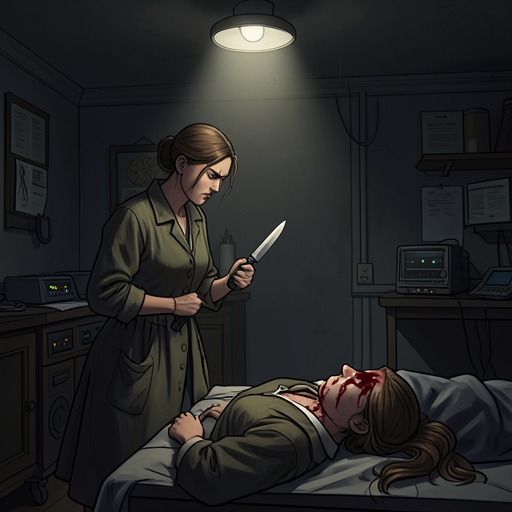
Later, as Ken intends to assault Zoe, she moves toward the loft hatch and drops to her knees in front of him, causing him to fall. She tries to push him toward the opening, but he catches her ankle, pulls her down, and beats her. Jill screams for him to stop. Ken eventually drags the unconscious Zoe back beside the cage and ties her to it again. The attempt fails, and Zoe is left unconscious, but it is a deliberate effort to turn the room’s layout against her captor rather than simply wait for help.
The police find the way into the loft and discover Jill in the cage and Zoe unconscious beside it. Jill immediately asks for an ambulance for Zoe. Bill Nicol unties Zoe and then frees Jill’s wrists from the sides of the cage; Eve Strong calls for medical help and backup. When asked what happened, Jill explains that Ken was going to assault Zoe and that Zoe had tried to get away, but the attempt had backfired. Zoe’s rescue is therefore witnessed and interpreted in part through Jill, whose testimony supplies the immediate circumstances while the rescuers attend to both women. The contrast with Zoe’s first report is decisive: at her home she could offer clues to an unknown intruder, but by the end she has become a victim whose survival and account expose the danger behind the apparently routine delivery.